The life of a woman runs on hormone driven cycles. Whether we like to admit it or not, our hormones play a huge role in how we are feeling, both physically and mentally on any given day. Arguably, the most drastic shift in a woman’s life is when they start going through their menopause, and while the typical symptoms and effects have often been spoken about, it’s unfortunately only very recently that women have started speaking up more how it affects them in their workplace.
The most common ways the menopause affects women at work:
- Poor concentration
- Tiredness
- Poor memory
- Low moods
- Decreased confidence
For some people reading this, these symptoms might be a shock, because they aren’t the well-known typical ones of hot flashes, night sweats, irregular periods, or headaches, which let’s face it, are bad enough. For others, they know all about the mental effects of the menopause.
The symptoms listed, although normal for the menopause, are far less spoken about. They are debilitating when in the workplace, it can make it much harder to get your work done up to your usual or standard, or even at all.
Famously, Davina McCall has spoken out about her menopausal brain fog as thinking she was losing her mind and would lose her job. It can feel frightening.
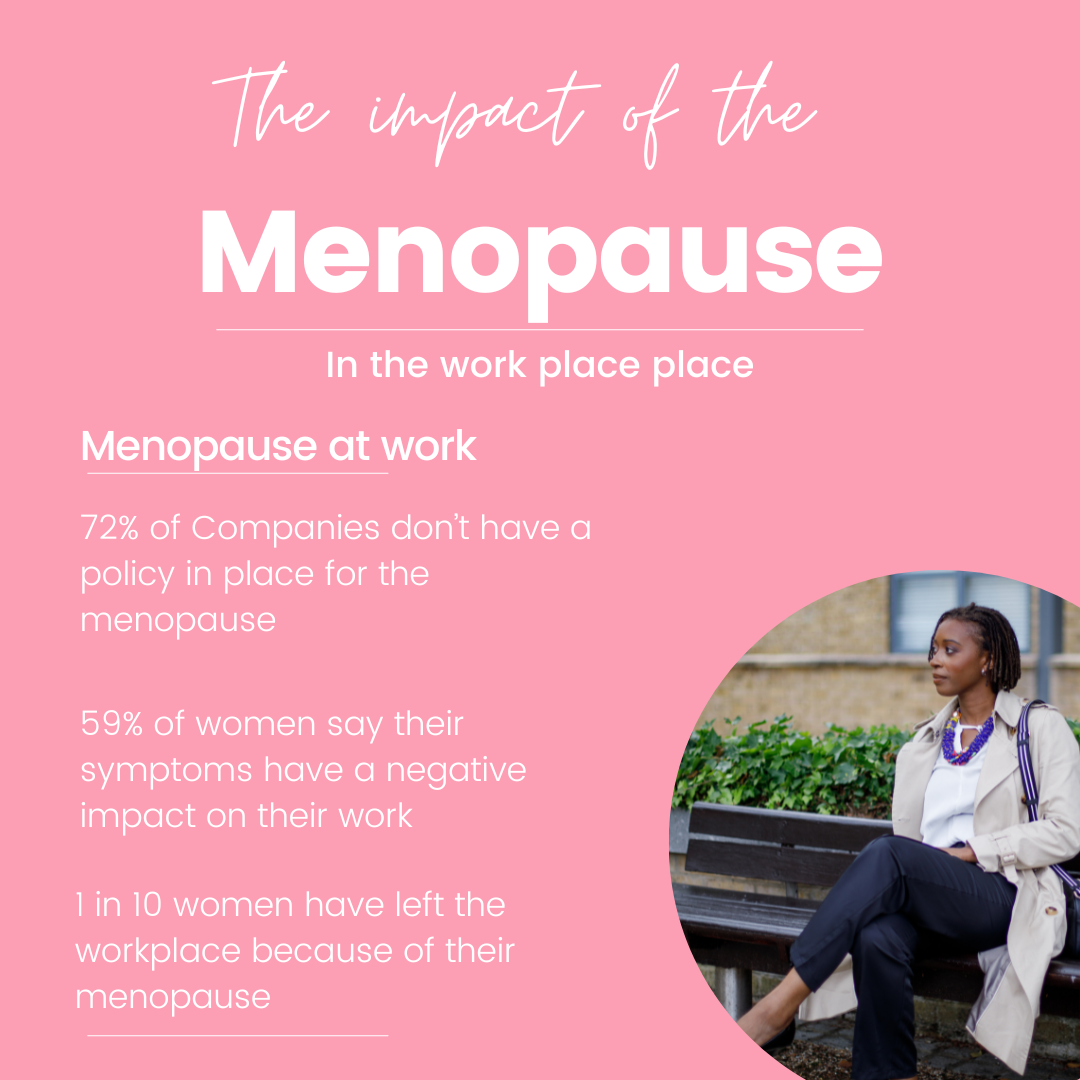
The fastest growing demographic in the workplace is the over 50s women, for many, they are in a great place career wise, having worked hard to progress and hold integral leadership roles. And it seems a good point to add in, that women are often peri-menopausal for up to 10 years before fully experiencing the menopause. Meaning that varying degrees of these symptoms can be experienced for an incredibly long time. As an employer, if you have women between 40-55 (typically) then this is relevant to you and your team.
The Online Menopause Centre released statistics that say just 14% spoke about their symptoms with their employer, and 29% believed their employer could not help. Of the 14% that spoke up, half said their employer had done nothing, 18% had been offered flexible working and 7% had been given specific interventions, such as fans for hot flashes.
There is currently no legal obligation for companies or businesses to have a menopause policy in place. A study showed that 72% of firms had no policy in place that related to menopause in anyway, and that 50% of them believed, despite their lack of policies, that women felt confident enough to speak up.
But the truth is, so many women don’t. Why would they when there has been a notorious lack of depth when it comes to understanding all the symptoms? Why would they speak up and reach out if there isn’t something in place, in writing to support them.
So, what can a company do to support women experiencing the menopause?
Have a champion who is leading this in your organisation and supporting women
- Put a menopause policy in place
- Ensure that the lines of communication are open to them, and crucially, kept confidential
- Ensure those in leadership roles and HR are educated
- Provide menopause specific support – This could include simple, discreet solutions, such as: Recording meetings for when the forgetfulness strikes, having fans accessible to them at their desk and flexible working.
It is the hope, that with World Menopause Day, and increased awareness of the affects of the menopause that many workplaces start opening the conversations and educating their leaders to make a real lasting change.
The success of any company is reliant on team culture and well-being, and now is the time to become a leader of change.